- Applications may be submitted until 31 October 2026 at 4:00 p.m.
- Interviews will be held between 2 and 6 November 2026.
- Planned employment start date: 1 December 2026.
For details, check the Job offers page.

For details, check the Job offers page.

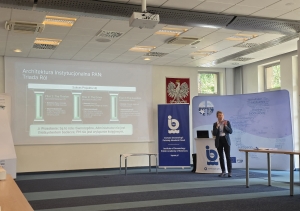
On 21–22 September 2026, Dr Angelika Zanki, who serves as a project manager and facilitator in the ERC StG Spectral Recycling project led by Prof. Karolina Ćwiek-Rogalska, participated in the specialised workshop “PolSCA Masterclass – Advanced Workshop: Research Project Management Using the PM² Methodology”, organised by the PolSCA – Polish Science Contact Agency in Brussels, in cooperation with the Institute of Oceanology of the Polish Academy of Sciences in Sopot.
Participation in the training formed part of Angelika’s continuous professional development and the ongoing enhancement of her competences in research project management and facilitation. Working on projects funded under ERC grants requires continuous updating of knowledge, becoming familiar with new management methodologies, and improving approaches to work organisation and team collaboration. Angelika consistently develops her professional skills in order to provide increasingly effective support for project implementation, streamline processes, and respond to the evolving requirements associated with the management of research projects.
During the two-day workshop, she deepened her knowledge of the application of the PM² methodology to research project management, with particular attention to the specific characteristics of projects implemented within European funding programmes. A significant part of the training focused on practical aspects of project planning and monitoring, tracking milestones and outcome and impact indicators, as well as requirements related to periodic and final reporting. The workshop also addressed the potential use of artificial intelligence in the reporting process, including the collection, organisation and summarisation of project data, as well as the preparation and verification of report content.
Another important component of the training was the development of competences in risk, issue and project change management. Participants worked on methods for identifying and classifying risks, maintaining a risk register, and developing appropriate risk response plans. The workshop also addressed the distinction between risks and issues, escalation pathways for problems, and change control in relation to the project scope, schedule and budget.
The workshop also covered project communication and diplomacy, particularly in situations requiring coordination, agreement and negotiation within teams and consortia. Participants were introduced to the potential use of prompt engineering and AI tools to support communication, negotiations and day-to-day administrative work. Particular attention was given to the Human-in-the-Loop and AI-Copiloting models, which can support the streamlining of processes while retaining human responsibility for decisions. The topic of artificial intelligence generated an extensive discussion among the participants, highlighting the need to establish clear principles and guidelines for the use of various AI tools in the day-to-day administration of European research projects.
An important part of the training was also the analysis of the research project life cycle, from initiation through to project closure, including work with real-life scenarios and the exchange of experiences and good practices. The workshop also addressed the respective responsibilities of the individuals involved in project implementation, helping to further clarify roles and areas of cooperation within the project.
The workshop, led by Dr Agnieszka Grzegorczyk, a trainer and expert in project management in the R&D sector and public administration, had a strongly practical focus and provided an opportunity to directly relate the topics discussed to real-life challenges encountered in the implementation of research projects.
Participation in the training enabled Angelika to expand and update her competences in ERC project management, as well as to become familiar with new tools and working methods that can be applied to the ongoing implementation of the project. The knowledge acquired may contribute to further improvements in organisational processes, reporting, risk management and project communication. At the same time, Angelika actively shared her own experience and proposed solutions to practical challenges arising in the context of working on the aforementioned project, thereby contributing to the exchange of knowledge and good practices among the workshop participants.
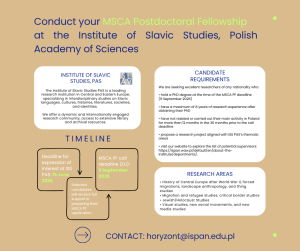
The Institute of Slavic Studies of the Polish Academy of Sciences (ISS PAS) invites expressions of interest from postdoctoral researchers who wish to apply for the prestigious Marie Skłodowska-Curie Postdoctoral Fellowships (MSCA PF, Horizon Europe) with ISS PAS as their host institution.
We are looking for talented and ambitious scholars from around the world who are eager to conduct cutting-edge research in a stimulating academic environment in the heart of Warsaw, Poland.
The Institute of Slavic Studies PAS is a leading research institution in Central and Eastern Europe with over 70 years of scholarly tradition. We conduct interdisciplinary studies on Slavic languages, cultures, histories, literatures, societies, and identities. We offer a dynamic and internationally engaged research community, access to extensive library and archival resources. We hold the prestigious HR Excellence in Research award, recognizing our commitment to providing a supportive and transparent research environment for researchers at all stages of their careers.
What We Offer
Who Can Apply
We are seeking excellent researchers of any nationality who:
Preferred topics
Timeline
How to Apply
Please send the following documents (in one PDF file) to horyzont@ispan.edu.pl with the subject: MSCA PF – Expression of Interest – Your Name:
For more information about our research profile, visit: https://ispan.waw.pl/default/en
For more information about MSCA PF, visit: https://marie-sklodowska-curie-actions.ec.europa.eu/actions/postdoctoral-fellowships
Details: Job offers

We would like to inform that under the Opus project of the National Science Centre, “Documents and Bureaucracy in the Formerly German Lands: State Making, Regulating and Controlling in Poland and Czechoslovakia (1940s–1970s), no. 2021/41/B/HS3/00118, implemented at the Institute of Slavic Studies, Polish Academy of Sciences, there was an open competition for the position of a research scholarship. Based on the evaluation of submitted documents and an interview, the recruitment committee decided to award the fellowship to mgr Kacper Rosner-Leszczyński. Congratulations!
Details: Job offers


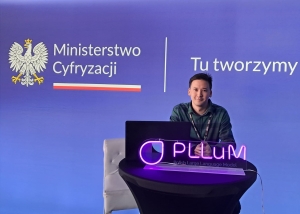
On October 21st, 2025, MS Valéry Trân Thiên of the Semantics and Computational Linguistics Team at ISS PAS represented the HIVE AI consortium at Masters and Robots Warsaw 2025. The event attracted experts, entrepreneurs, innovators, technologists, and leaders from renowned global academic institutions, associations, and technology blogs including Google, NYU Stern School of Business, Executive Coaching and Consulting Institute, Imperial Business School in London, Eindhoven AI Systems Institute, Copenhagen Business School, Queensland University of Technology, Human Future, and What’s Next? etc.
At the Ministry of Digital Affairs of Poland stand, Valéry Trân Thiên addressed visitor inquiries about the progress of artificial intelligence development within Poland. He discussed both commonalities and distinctions between prominent Polish generative models, Bielik and PLLuM. The majority of questions centered on the PLLuM model and its deployments in the municipal offices of Gdynia and Łódź.
Since 2024, the Semantics and Computational Linguistics Team of the Institute of Slavic Studies, PAS, has been actively involved in advancing artificial intelligence through participation in two major projects funded by the Ministry of Digital Affairs: PLLuM (“Responsible development of an open large language model PLLuM [Polish Large Language Universal Model] to support breakthrough technologies in the public and economic sectors, including an open-source Polish-language intelligent citizen assistant”) and HIVE AI (“HIVE AI: Development and pilot deployment of large language models in Polish public administration”). The team’s participation at prominent national and international events is a key component of wider efforts to promote the PLLuM family of Polish generative models.


Dr. Csilla Horváth, visiting researcher from the University of Helsinki, spent a short-term scientific mission at the Institute of Slavic Studies PAS between 7–22 September 2025, within the framework of the Plurilingmedia Cost Action.
During her stay, Horváth participated in academic discussion on the role of digitalisation and media practitioners in maintaining the ethnolinguistic vitality of minority languages without official status and literacy with researchers cooperating in the project “Linguistic Diversity in Poland: Collateral Languages, Language-oriented Activities, and Conceptualization of Collective Identity”.
She also had the opportunity to attend the III Festiwal Gwar Pogranicza (III Festival of Border Language Varieties) in Hajnówka on 13 September 2025.
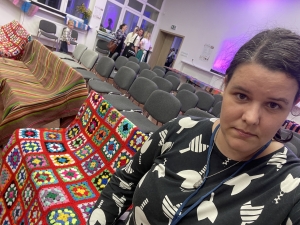
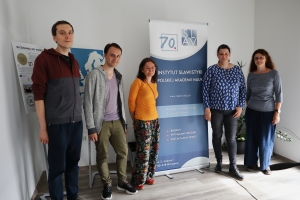
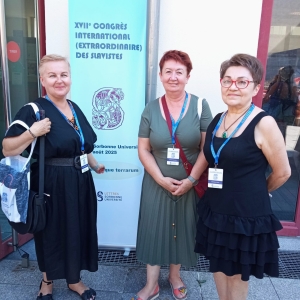
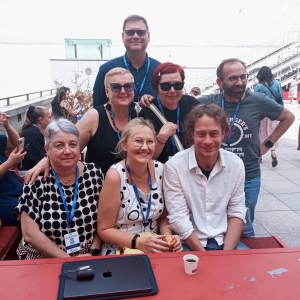
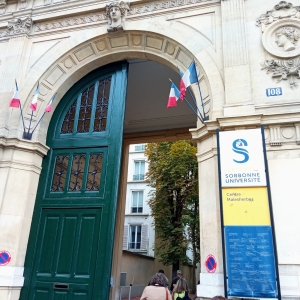
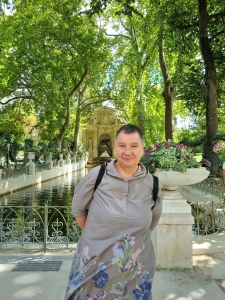
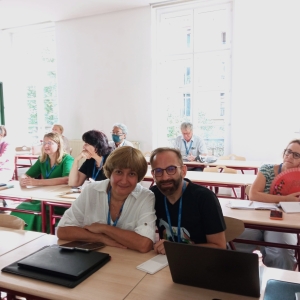
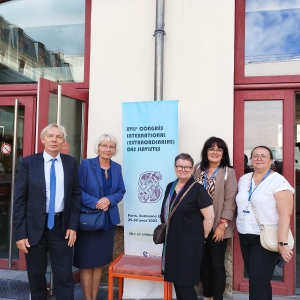
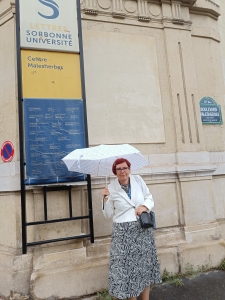
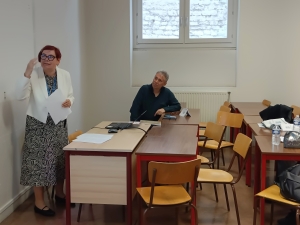
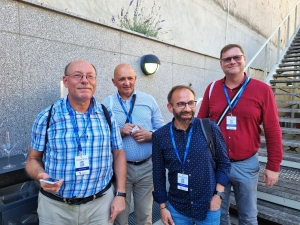
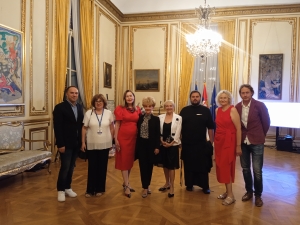
The 17th (Extraordinary) International Congress of Slavists took place in Paris from August 25 to 30, 2025. There were researchers from the Institute of Slavic Studies of the Polish Academy of Sciences (ISS PAS) among its participants.
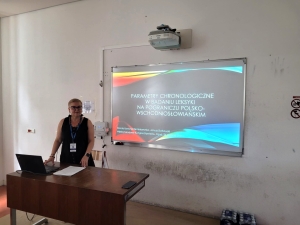
On August 26, Prof. Dorota Krystyna Rembiszewska delivered a co-authored paper (with Janusz Siatkowski) entitled “Chronological Parameters in the Study of Lexis on the Polish–East Slavic Borderland”. On August 28, she represented Poland at the meeting of the national committees of the International Committee of Slavists (ICS). In addition, Prof. Rembiszewska assumed the chairmanship of the Commission on the Pan-Slavic Linguistic Atlas.
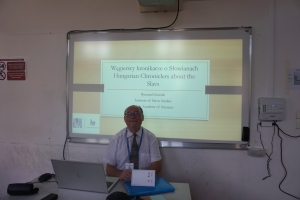
On Wednesday, August 27, at the request of the organizers, Prof. Ryszard Grzesik chaired the session entitled Rapports réciproques entre les cultures savantes slaves, byzantines et ouest-européennes jusqu’à l’époque modernę (Reciprocal Relations between erudite Slavic, Byzantine, and Western European Cultures until the Early Modern Period). Within this session, he presented a paper entitled “Hungarian Chroniclers on the Slavs”. The following day, he also chaired — in a hybrid format — a meeting of the Professor Gerard Labuda Commission on the Early History of the Slavs, which was accredited for the 2025–2029 term.
Prof. Piotr Sobotka delivered two lectures at the congress: on August 26, “Происхождение славянских экспонентов «истины» с функциональной точки зрения: заметки по этимологии и методу” (The Origin of Slavic Exponents of “Truth” from a Functional Perspective: Notes on Etymology and Method), and on August 30, “The Proto-Slavic Dictionary – Transition from the Printed to the Digital Version”. Furthermore, on August 28, during a meeting of the Etymological Commission, Prof. Sobotka was elected its secretary (with Prof. Marta Bjeletić from the Serbian Academy of Sciences as the chairperson). Among the newly elected Commission members there was also Dr. Szymon Pogwizd from the ISS PAS.
Prof. Alena Rudenka participated in Section 1.2. Histoire des langues slaves (History of the Slavic Languages), particularly in subsection 1.2.5. Interaction des langues slaves normées et des dialectes locaux à différentes périodes de l’histoire (Interaction of Standard Slavic Languages and Local Dialects in Different Historical Periods). Her paper focused on letters from the Grand Duchy of Lithuania from the 14th to 16th centuries. In addition to attending thematic sessions and round-table meetings, Prof. Rudenka also participated in the activities of the Commission for Slavic Ethnolinguistics at the Congress of Slavists, with which she has long been associated through her work on the EUROJOS project. The meeting was held in a hybrid format. A report on the Commission’s activities over the last six years has been published at: https://www.slavic-ethnolinguistics.org/home/novosti-events.
Dr. hab. Anna Engelking, Associate Professor at the ISS PAS, chaired Section 3.1.4. on August 29, titled L’héritage des grands slavistes (The Heritage of the Great Slavists), where she presented a paper entitled “The Unknown Face of Polish Slavic Anthropology: The Legacy of Józef Obrębski and Its Dissemination”.
On August 29, Dr. hab. Grażyna Szwat-Gyłybowa, Associate Professor at the ISS PAS, presented a paper entitled “The Topos of the «Immured Woman» in the 20th and 21st Century Bulgarian Scholarly Thought”, in which she discussed, among other things, the results of her research conducted within the OPUS grant of the National Science Centre entitled “The Topos of the «Immured Woman» in the Cultures of Southeastern Europe and Hungary”.
Dr. hab. Zofia Sawaniewska-Mochowa, Associate Professor (prof. em.) at the ISS PAS, also participated in the congress. On August 28, during a session of the Commission for Slavic Ethnolinguistics, she presented a paper and a visual presentation entitled “Women’s Ego-documents as Sources for Ethnolinguistic Research”. The paper was closely connected to the Polish-Lithuanian team project currently being carried out  under the National Programme for the Development of the Humanities, entitled “The Ego-documents of Emilia Wróblewska (1850–1886) — A Testament of Life and Ideological Views of a Polish Woman from the Vilnius Intelligentsia. A Digital Edition of 7 Diaries with Critical Apparatus and an E-Monograph”. The lecture concerned methodological approaches to studying the complex mental construct of the identity of a woman living at the cultural crossroads during the time of partitions after the fall of national uprisings. The presentation sparked a lively and inspiring discussion. The session was attended by ethnolinguists from Poland, Croatia, Serbia, Bosnia and Herzegovina, North Macedonia, an independent researcher from Belarus, and Dr. Rima Cicėnienė, Director of Research at the Wróblewski Library of the Lithuanian Academy of Sciences, who represented the project partner from Lithuania..
As part of the Congress, a meeting of the Commission on Linguistic Bibliography was held, chaired by Dr. Paweł Kowalski of the ISS PAS. During the session, new members were elected, including Dr. Roman Tymoshuk (ISS PAS), Dr. Jelena Janković (SANU), Dr. Ana Golubović (University of Belgrade), Dr. Julia Cygwinceva (NANU), Dr. Monika Łaszkiewicz (UMCS), and Dr. Ekaterina Petkova (BAS). Dr. Kowalski also participated in the thematic block of the Commission on Word-Formation and attended a meeting at the Serbian Embassy. Additionally, he is a candidate for the position of secretary of the Commission on the Pan-Slavic Linguistic Atlas.
This year, for the first time, the Slavic Studies Committee of the Polish Academy of Sciences, in cooperation with the publishing house of the Institute of Slavic Studies PAS, prepared the 14th volume in the series “From Polish Slavic Studies”, edited by Prof. Dorota Krystyna Rembiszewska, Prof. Ryszard Grzesik, and Prof. Stanisława Niebrzegowska-Bartmińska. As in previous years, the volume is divided into two parts: “Literary and Cultural Studies” and “Linguistics”. The volume includes papers by Polish historians, literary and cultural scholars, and linguists that were presented during the Paris congress.
Prof. Natalia Bernickaja, the chair of the ICS, announced that the next congress will take place in Prague in 2029.

We would like to inform you about the results of the competition for the position of post-doc (2) in the project “Faces of Smuggling in the Polish-Slovak Borderland between 1918 and 1949” ref. no. 2023/51/D/HS3/01105 affiliated at the Institute of Slavic Studies of the Polish Academy of Sciences. After the evaluation of the submitted documents and the interview the competition committee decided to employ Dr. Dariusz Nikiel in this position.
By continuing to use the site, you agree to the use of cookies, in accordance with the current browser settings. Privacy policy
The cookie settings on this website are set to "allow cookies" to give you the best browsing experience possible. If you continue to use this website without changing your cookie settings or you click "Accept" below then you are consenting to this.